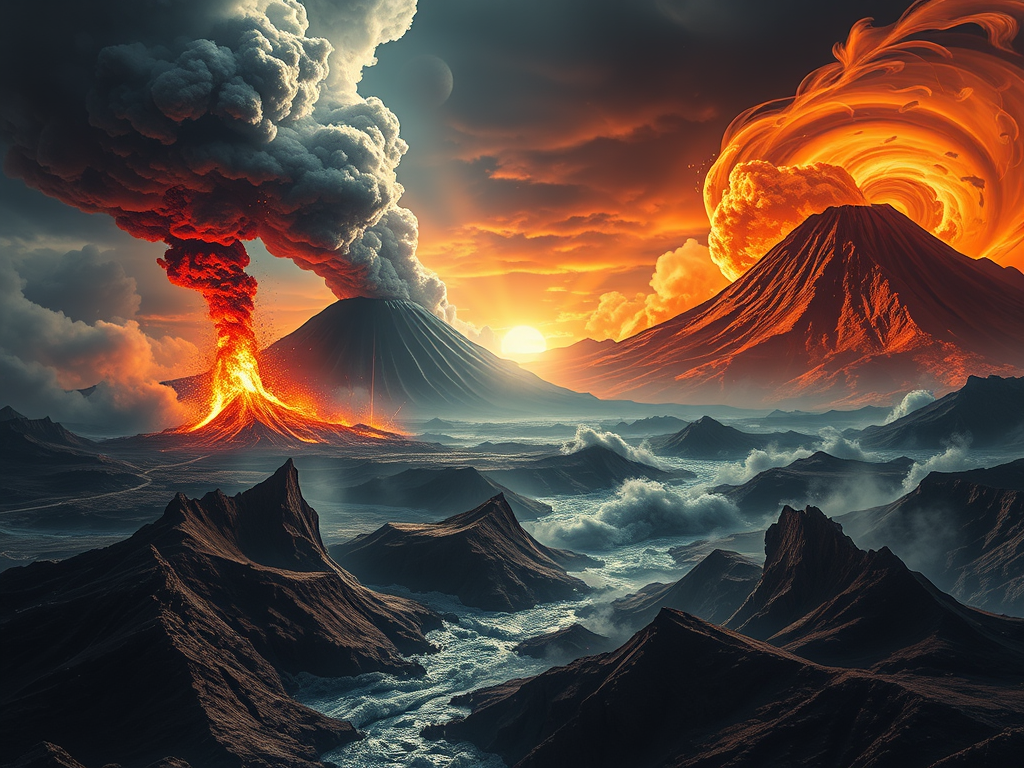
2026–2035: Earthquakes, Volcanoes, Floods, and Pandemics
Introduction – Why Predicting Disaster Matters
Disasters strike suddenly, often when forgotten.
Yet through Baekhwa I-Ching, symbolic patterns reveal hidden warnings before they manifest.
This is not about spreading fear, but about awareness and preparation.
Chapter 1 – Mega Earthquakes: Japan, U.S., and Beyond
- Japan (Nankai Trough):
- Hexagrams show Earth + Water disruption → linked seismic chains.
- Timeline: 2029–2031 peak risk.
- Impact: Eastern Pacific coast from Shikoku to Kanto.
- United States (San Andreas / Cascadia):
- Symbol: Mountain shaken by Thunder.
- High probability of a West Coast mega-quake within 2030s.
- Cascadia Subduction Zone particularly active around 2028–2032.
- Other regions:
- Turkey, Chile, and Himalayan belt show recurring hexagrams of “sudden collapse.”
Conclusion: The next decade is one of multi-regional seismic awakening.
Chapter 2 – Volcanoes: Sleeping Giants Stirring
- Japan (Mount Fuji):
- Symbol: Fire over Thunder → eruptive release.
- Risk rises 1–3 years after Nankai Trough event.
- Ashfall could cripple Tokyo and eastern infrastructure.
- Indonesia:
- Multiple hexagrams indicate repeated eruptions (Merapi, Krakatoa).
- Timeline: 2027–2032 high risk.
- Iceland & Italy (Etna/Vesuvius):
- “Fire over Water” hexagram warns of eruptions disrupting Europe’s airspace and trade.
Chapter 3 – Floods and Climate Disasters
- Symbol: Water overflowing Lake.
- Timeline: 2027–2030 and 2033 show repeating “deluge” signs.
- Asia:
- Japan, China, and Bangladesh face megafloods.
- Europe:
- Northern Europe (Germany, Netherlands) → catastrophic river floods.
- U.S.:
- Midwest and Florida → severe hurricanes and inland floods.
Conclusion: Floods may surpass earthquakes as the dominant disaster of the late 2020s.
Chapter 4 – Pandemics: Recurrence, Not Extinction
- Symbol: Wind over Lake → falsehood and contagion.
- Timeline: 2028 shows strong signs of global spread.
- Nature: high transmission, low fatality, but enough to disrupt societies.
- Unlike COVID-19, this wave will be shorter but more frequent.
Chapter 5 – Global Risk Chart (2026–2035)
| Year | Earthquakes | Volcanoes | Floods | Pandemics | Overall Risk |
|---|---|---|---|---|---|
| 2026 | △ | × | △ | × | Medium |
| 2027 | △ | × | ◎ | △ | High |
| 2028 | △ | × | ◎ | ◎ | Very High |
| 2029 | ◎ | △ | ○ | △ | Extreme |
| 2030 | ◎ | △ | ○ | △ | Extreme |
| 2031 | ○ | ◎ | △ | × | High |
| 2032 | △ | ○ | △ | × | Medium |
| 2033 | △ | × | ◎ | × | High |
| 2034 | △ | △ | ○ | × | Medium |
| 2035 | × | △ | △ | × | Medium |
(◎ = Major risk, ○ = Significant, △ = Low probability, × = Minimal)
Conclusion – Dissolution and Renewal
The I-Ching reveals:
“The old structures will dissolve, the new will not yet be born. Humanity must walk carefully between them.”
- Earthquakes remind us of fragility.
- Volcanoes warn of sudden eruption after silence.
- Floods symbolize the planet cleansing itself.
- Pandemics remind us of unseen vulnerabilities.
Preparedness is not paranoia—it is wisdom.
The choice is whether we enter the 2030s blindly, or with eyes open to destiny’s patterns.
コメントを残す